
Review and specifications
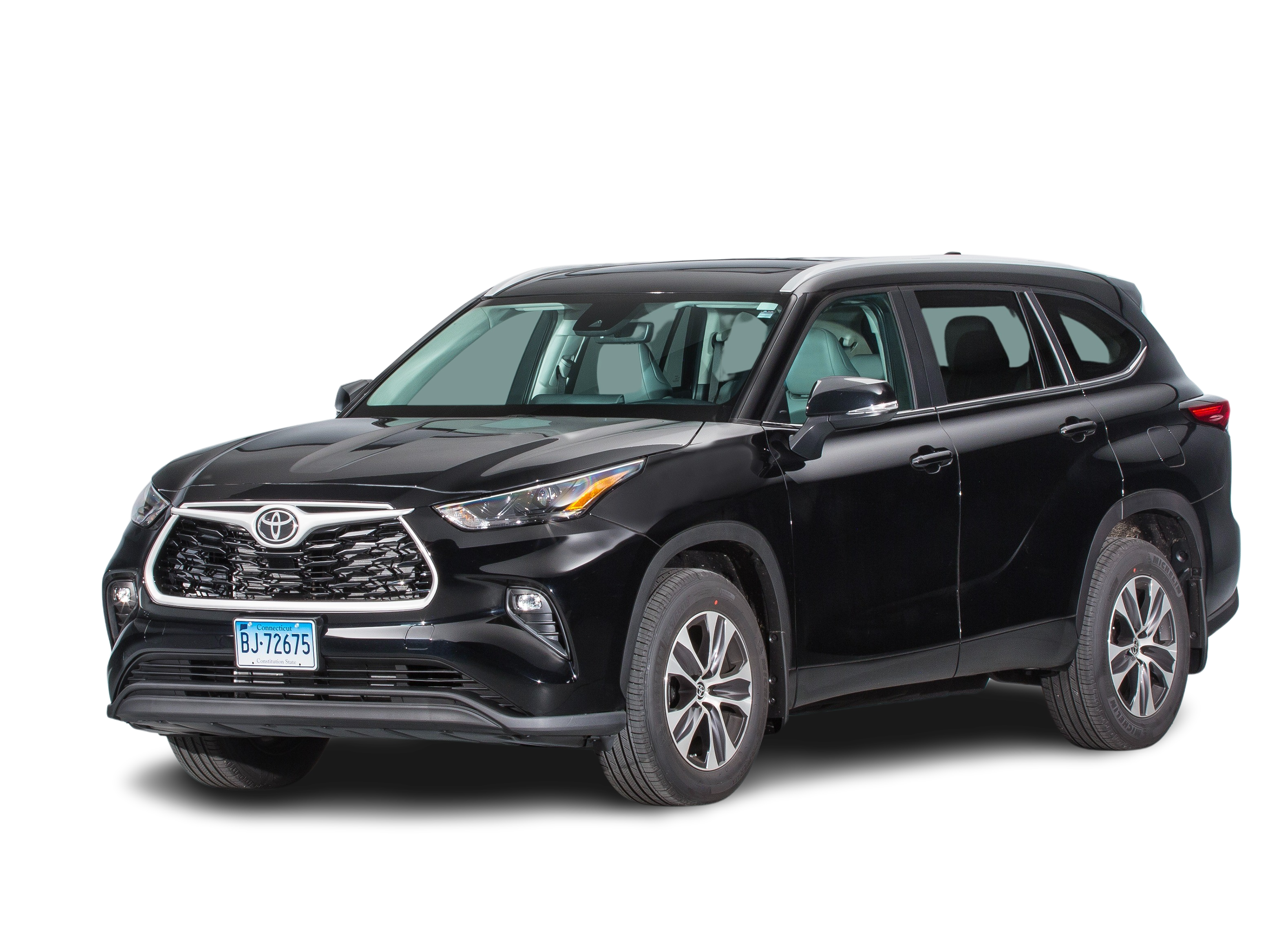
2025 Toyota Highlander
The redesigned for 2020, the fourth-generation Highlander retains its qualities of comfortable ride and a smooth powertrain. Handling is sound and secure. Interior fit and finish is upgraded, particularly in higher trim versions. The smooth and punchy 295-hp V6 packs a lot of reserve power and gets a competitive 22 mpg overall. The hybrid version is less powerful but gets an excellent 35 mpg overall. Both seven- and eight-passenger seating configurations are available. Either way, the second row is very roomy but the third row is tiny. Controls are easy to use and Android Auto and Apple CarPlay compatibility is standard. The Toyota Safety Sense 2.0 suite includes standard forward collision warning, automatic emergency braking with pedestrian detection, lane departure warning, and lane keeping assistance. Blind spot warning and rear cross traffic warning are optional. Beginning with the 2021 model year, LED headlights (low and high beam) are now standard on all models. A sporty XSE trim is also new. Updates for 2022 include minor trim and color changes, plus the power passenger's seat gets more adjustments. For 2023, the Highlander got a turbocharged four-cylinder engine in place of the long-serving V6, plus a new infotainment system. For 2024, the L trim was discontinued and blind spot warning and rear cross traffic warning became standard across the line. AWD is standard on gas models for 2026.
- Market value
- $43,175
- Fuel
- Conventional
- Transmission
- Automatic
- Seats
- 7
At a glance
Model data
Overview
- Powertrain
- Conventional
- Body style
- 4-door SUV
- Drive type
- AWD
- Transmission
- Automatic, 8-speed
- Category
- Midsized SUVs 3-row
- Generation began
- 2020
Pricing
- Current retail median
- $43,175
- Retail value range
- $35,275 - $50,325
- Original MSRP range
- $40,320 - $54,475
- Trade-in range
- $33,990 - $48,835
Ratings
- Road test score
- 84/100
- Owner satisfaction
- 4/5
- Would buy again
- 73%
- Reliability
- 3/5
Fuel economy
- EPA city
- 21 MPG
- EPA highway
- 27 MPG
- EPA combined
- 23 MPG
- Tested city
- 14 MPG
- Tested highway
- 33 MPG
- Tested overall
- 22 MPG
- Annual fuel cost
- $1,745
- Cruising range
- 400 miles
Road tests
- 0-30 mph
- 3.1 sec
- 0-60 mph
- 7.7 sec
- 60-0 mph braking
- 133 ft
- Avoidance speed
- 52 mph
- Test status
- Test Completed
Dimensions
- Length
- 195 in
- Width
- 76 in
- Height
- 68 in
- Wheelbase
- 112 in
- Weight
- 4,385 lb
- Maximum load
- 1,390 lb
- Towing capacity
- 5,000 lb
Interior
- Seating
- 7 people
- Front head room
- 3.5 in
- Front leg room
- 42 in
- Rear head room
- 4 in
- Rear leg room
- 33.5 in
- Cargo volume
- 40.5 cu ft
- Luggage
- 2+1+0
Owner feedback
- Comfort
- 5/5
- Driving
- 5/5
- Styling
- 5/5
- Value
- 1/5
Environmental impact
- Air pollution score
- 6/10
- Greenhouse gas score
- 5/10
- SmartWay
- No
Brand context
About Toyota
<p>Toyota has a reputation for building efficient and exceptionally reliable vehicles. This holds true in most cases, with a few exceptions. Most of their models do well in our testing, thanks to their impressive fuel economy, comfortable rides, quiet cabins, good controls, and generous standard safety equipment. All of this makes Toyotas among the best options for used vehicles. The brand was a hybrid pioneer, starting with the original Prius. Toyota has evolved and expanded that technology, and most vehicles in its lineup are available as a hybrid. Toyota sells a number of plug-in hybrids and an increasing number of EVs, including the bZ and C-HR. The company also knows how to add a dosage of excitement into its lineup: The GR86, GR Corolla, and Supra are legit, fun-to-drive sports cars.</p>
Vehicle ID: 33347 First published: December 5, 2024 Updated: June 4, 2026
Values may vary by trim, options, location, and market conditions.
Keep comparing
Related vehicles
2024
Toyota Highlander
$39,025
2023
Toyota Highlander
$35,513
2022
Toyota Highlander
$31,838
2026
Toyota Highlander
$50,150
2027
Toyota Highlander
$45,570
$47,713